Showing posts with label UC Berkeley. Show all posts

Thursday, November 08, 2007

Transportation Seminar and Cookie Time 9 November: A Macroscopic Approach to Urban Traffic


This week's talk, given by CEE PhD student Nikolas Geroliminis (CV in pdf format), approaches a description of vehicular movement in urban areas on a macroscopic scale. Geroliminis has formed his conclusions using both simulation and real data from metropolitan areas (here is a link to a 4-hour simulation by Geroliminis and Prof. Daganzo). Here is the abstract:
Various theories have been proposed to describe vehicular traffic movement in cities on an aggregate level. They fall short to create a macroscopic model with variable inputs and outputs that could describe a rush hour dynamically. My dissertation work shows that a Macroscopic Fundamental Diagram (MFD) relating production (the product of average flow and network length) and accumulation (the product of average density and network length) exists for neighborhoods of cities in the order of 5-10km2. It also demonstrates that conditional on accumulation large networks behave predictably and independently of their Origin-Destination tables. These results are based on analysis using simulation of large scale city networks and real data from urban metropolitan areas. The real experiment uses a combination of fixed detectors and floating vehicle probes as sensors. The analysis also reveals a fixed relation between the space-mean flows on the whole network and the trip completion rates, which dynamically measure accessibility. This work also demonstrates that the dynamics of the rush hour can be predicted quite accurately without the knowledge of disaggregated data. This MFD is applied to develop perimeter control strategies based on neighborhood accumulation and speeds and improve accessibility without the uncertainty inherent in today’s forecast-based approaches. The looking-for-parking phenomenon that extends the average trip length is also integrated in the dynamics of the rush hour

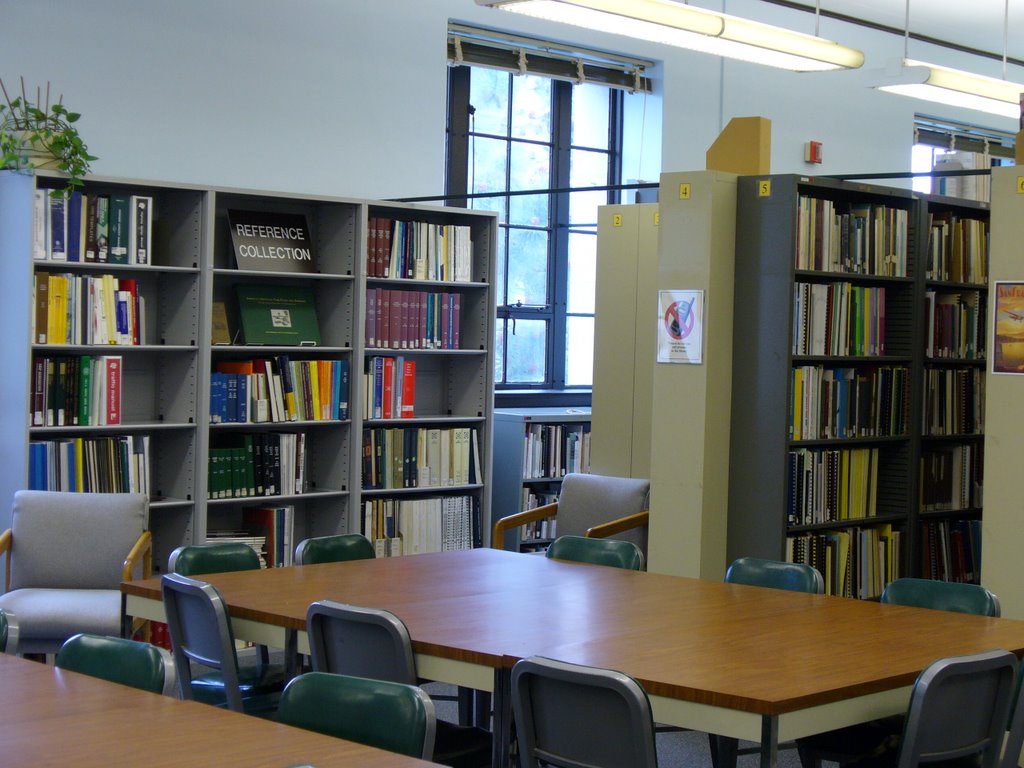
The seminar will be in 240 Bechtel at 4:00 and will be preceded by Cookie Time in the ITS Library (4th Floor McLaughlin) at 3:30. Please Note: Cookie Time will still be held regardless of other ITS closures for Veterans' Day

Tuesday, October 09, 2007

Chilean Commuters Sue Over Transit System


Local transit in the Chilean city of Santiago underwent a major overhaul in the past year. The 3,000 private bus companies that competed for passengers over the past 17 years have been consolidated into just 10 companies under the new transit system, Transantiago. The new system add hours to the average commute time and has cost thousands of people their jobs as a result of getting them to work late. President Michele Bachelet has issued a formal apology to the people of Santiago for the debacle of Transantiago. Kirsten Sehnbruch, a scholar at Berkeley's Center for Latin American Studies, explores the implications of Transantiago for Bachelet's presidency in a recent paper.

Tuesday, October 02, 2007

Bus Rapid Transit explained


The proposed East Bay Bus Rapid Transit program has attracted much comment in the local media, some of it ill-informed or hostile. (Why are so many people in "progressive" Berkeley scared of change and opposed to making life better for non-drivers?)

Wolf Homburger, a professor emeritus at ITS Berkeley, brings some measured judgment to this imbroglio, explaining how BRT works and what it entails for the region in Commentary: An Analysis of Bus Rapid Transit in the Berkeley Daily Planet.

(Image from AC Transit)

Friday, August 03, 2007

Low Carbon Fuel Standard for California


"A Low Carbon Fuel Standard for California. Part 2, Policy analysis" coordinated by Daniel Sperling, director of ITS UC Davis and Alex Farrell, director of the TSRC at UC Berkeley, was published on August 1. Outlining policies to achieve the state's goal of reducing the carbon content of gasoline to cut the state's greenhouse gas emissions, it is the first statement of its kind in the world. Part 1 of the report, which described several technological means towards carbon reduction, was published in May.

The full story is available from the Environmental News Service.

See the full text of Part 1 and Part 2 of "A Low Carbon Fuel Standard for California." They are also available on the websites of the TSRC and ITS at UC Davis.

Friday, May 18, 2007

"Whatever happened to the Segway?"

A couple of years ago, we were taken by surprise when two members of the general public entered the Transportation Library mounted on Segways (but at least they wore clothes.) This was one of the few times these machines have been observed. Apart from rich eccentrics and UC Berkeley PD officers, who actually uses these things? Once expected (by their sellers) to quickly make every sidewalk into a Segway freeway, in 2007 these critters and their riders are still head-turning rarities. And most ominously, the Library of Congress doesn't provide a term for the Segway in its Subject Headings, an indication that the amount of literature about the machine is pretty negligible. London's Independent newspaper bucks the trend with an article that ponders the Segway story, and here's a video where experts try to remember life before the Segway.

Thursday, April 26, 2007

"Berkeley study: car pool lanes are effective"

ITS Berkeley in the news. The recent findings by Mike Cassidy and Carlos Daganzo on how HOV lanes affect traffic flow are summarized in a local ABC News report.

Saturday, April 21, 2007

The Great Quake of '06

In 2006 the Transportation Library participated in The Great Quake: the Legacy of Disaster exhibition in UC Berkeley's Main Library in 2006. The exhibition was part of the campus's recognition of the centennial of the 1906 San Francisco Earthquake. Focusing on themes such as transportation, water resources, public policy, and earthquake preparedness, the exhibits gave a glimpse of how UC Berkeley researchers and local agencies have worked to reduce risks and improve disaster management.

Staff member Seyem Petrites selected items from the Library's collections to arrange an exhibit featuring programs developed by Bay Area agencies and transportation providers to reduce the region's vulnerability to earthquakes. The exhibits were on display from April 18 through the end of August 2006 in the Bernice Layne Brown Gallery in Doe Library. An expanded version of the exhibition continues online, courtesy of the Bancroft Library.

Futuristics

If you liked the previous entry on technological forecasts from 1900, you may well enjoy Engineering Futuristics, an online exhibition of weird and wonderful transportation ideas from the past. Assembled by our Operations Manager Paul Hernandez from items in the Transportation Library's collections, the physical exhibition was originally displayed in the lobby of UC Berkeley's Main Library. It reopened on Cal Day, April 16, 2005 on the ground floor of the breezeway between McLaughlin Hall and O'Brien Hall.

Paul talks about the exhibition in an interview in the online magazine The High Hat.

Thursday, April 20, 2006

Welcome!


Welcome to TransBlog from the Institue of Transportation Studies Library at UC Berkeley. TransBlog will discuss new developments in transportation research, as well as highlight services and resources for those interested in transportation engineering and planning. Stay tuned!